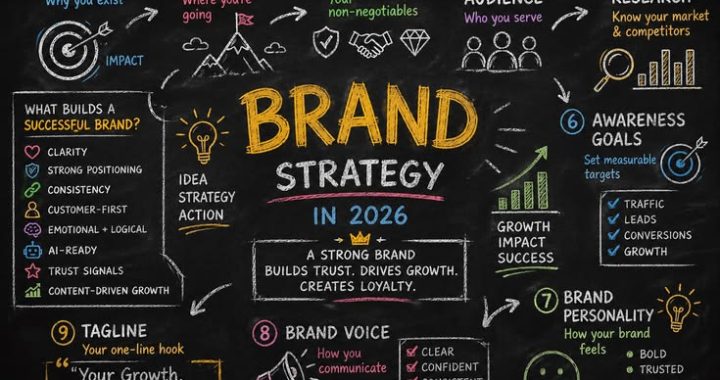
In today’s competitive digital world, having a good product or service is not always enough. Customers are surrounded by advertisements, social media posts, websites, and brands competing for their attention every day.
So, what makes one brand memorable while another gets ignored?
The answer often comes down to strong branding and a clear digital marketing strategy.
Branding helps people understand who you are, what you offer, and why they should choose you. Strategy provides the direction needed to communicate that message consistently and reach the right audience.
Together, branding and strategy can turn a business into a recognizable and trusted brand.
What Is Branding in Digital Marketing?
Branding is much more than a logo, color palette, or tagline.
In digital marketing, branding includes the overall identity and experience people associate with your business.
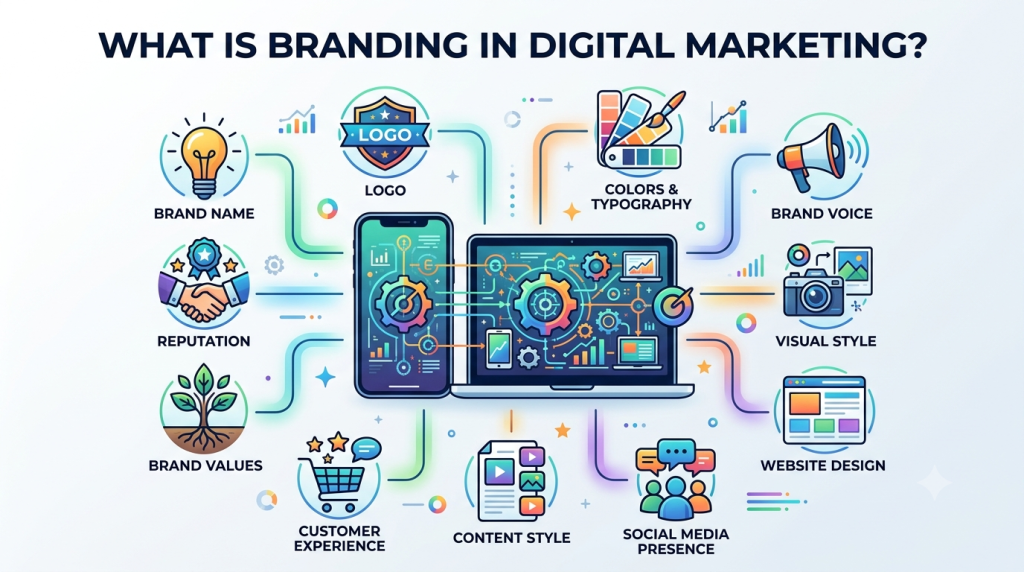
It can include:
- Brand name
- Logo
- Colors and typography
- Brand voice
- Visual style
- Website design
- Social media presence
- Content style
- Customer experience
- Brand values
- Reputation
Every interaction contributes to how customers perceive your business.
If customers saw your content without your logo, would they still recognize your brand?
That’s a good test of whether your branding is consistent and memorable.
Why Is Branding Important for Digital Marketing?
A strong brand can help a business become more recognizable and build credibility with its audience.
When customers repeatedly see consistent visuals, messaging, and experiences, they
can develop familiarity with the brand.
Strong branding can help you:
- Build brand recognition
- Create customer trust
- Differentiate from competitors
- Communicate your values
- Improve customer loyalty
- Create a consistent online presence
- Support long-term business growth
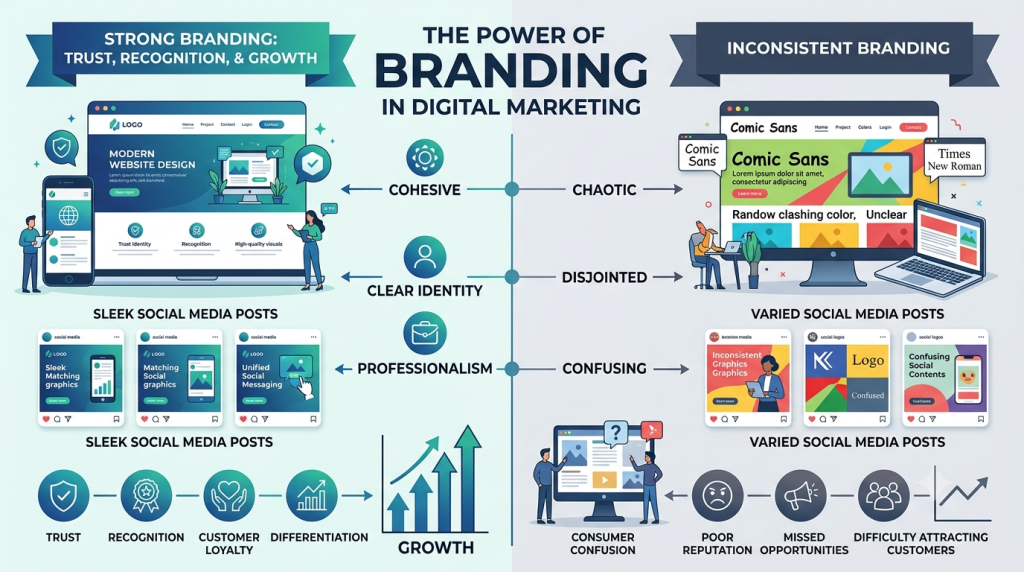
For example, imagine two businesses offering similar services.
One has a professional website, consistent social media design, clear messaging, and a recognizable visual identity.
The other uses different colors, inconsistent messaging, and an unclear website.
Which one would appear more trustworthy?
This is where branding becomes a competitive advantage.
What Is a Digital Marketing Strategy?
A digital marketing strategy is a structured plan for achieving marketing goals through digital channels.
Instead of randomly posting content or running advertisements, a strategy answers important questions such as:
- Who is the target audience?
- What are their needs?
- What makes the brand different?
- Which platforms should the business use?
- What type of content should be created?
- What are the marketing goals?
- How will success be measured?
Are you marketing with a plan—or simply posting and hoping for results?
A strategy gives your marketing activities a clear direction.
Branding vs. Marketing Strategy: What’s the Difference?
Branding and strategy are closely connected, but they serve different purposes.
Branding answers:
“Who are we?”
It defines the identity, personality, values, and visual presence of the business.
Marketing strategy answers:
“How will we reach our audience?”
It determines the channels, content, campaigns, targeting, budget, and methods used to achieve business goals.
Think of it this way:
Branding is your identity.
Strategy is your direction.
You need both to build a strong digital presence.
1. Define Your Brand Identity
Before promoting your business, you need to understand what your brand represents.
Start by defining:
- Mission
- Vision
- Values
- Personality
- Target audience
- Unique selling proposition (USP)
- Brand promise
For example, a brand may want to be seen as:
- Professional
- Innovative
- Affordable
- Premium
- Friendly
- Reliable
- Creative
Your identity should influence how your business communicates across every digital platform.
2. Know Your Target Audience
You cannot create an effective branding strategy without understanding who you’re trying to reach.
Your audience may differ based on:
- Age
- Location
- Interests
- Profession
- Buying behavior
- Problems
- Needs
- Online habits
Instead of trying to reach everyone, identify the people who are most likely to need your product or service.
Do you really know what your audience wants from your brand?
Understanding your audience allows you to create more relevant content and messaging.
3. Create a Strong Brand Positioning
Brand positioning defines how you want your business to be perceived compared with competitors.
Ask yourself:
- What makes your business different?
- What problem do you solve?
- Why should customers choose you?
- What value do you provide?
- What do you want customers to remember?
A strong positioning statement can help guide your marketing communication.
For example:
“We help small businesses build a stronger digital presence through practical and result-focused marketing solutions.”
The statement clearly communicates the audience, value, and purpose.
4. Build a Consistent Visual Identity
Your visual identity should remain consistent across digital platforms.
This includes:
- Logo
- Brand colors
- Fonts
- Images
- Graphics
- Icons
- Website design
- Social media templates
Consistency helps create recognition.
If your website uses one visual style but your Instagram page looks completely different, customers may struggle to connect the two.
A consistent identity makes your brand appear more professional and organized.
5. Develop a Strong Brand Voice
Your brand voice is the way your business communicates with its audience.
For example, your brand might sound:
Professional:
“Discover digital marketing solutions designed to support your business growth.”
Friendly:
“Let’s take your online presence to the next level.”
Bold:
“Stop blending in. Start building a brand people remember.”
There is no single correct brand voice.
The important thing is to choose a tone that fits your audience and use it consistently.
6. Create a Content Strategy
Content is one of the most important parts of digital branding.
Your content gives your audience a reason to interact with your brand.
Content can include:
- Blog articles
- Social media posts
- Videos
- Reels
- Infographics
- Case studies
- Email newsletters
- Guides
- Website content
A good content strategy should balance different purposes:
Educational Content
Teach your audience something useful.
Inspirational Content
Motivate and connect with your audience.
Promotional Content
Showcase your products, services, or offers.
Trust-Building Content
Use testimonials, case studies, reviews, and results to demonstrate credibility.
Is your content only selling—or is it also helping your audience?
7. Choose the Right Digital Marketing Channels
Not every business needs to be active on every platform.
Your strategy should focus on channels where your target audience is most likely to spend time.
Depending on your business, these could include:
- Google Search
- SEO
- YouTube
- Email marketing
- Google Ads
- Your website
The right channel depends on your audience, goals, industry, and resources.
Being everywhere isn’t always the goal.
Are you using the right platforms—or just the most popular ones?
8. Use SEO to Build Long-Term Visibility
Branding and SEO can work together to increase online visibility.
When people search for your brand, products, services, or industry-related topics, your website and content can help introduce them to your business.
SEO can help your brand appear in relevant search results through:
- Helpful content
- Keyword research
- Website optimization
- Technical SEO
- Internal linking
- Quality backlinks
- Local SEO
Over time, appearing consistently in relevant searches can strengthen brand awareness.
9. Use Social Media to Build Brand Recognition
Social media is not only a platform for promotion.
It can help brands communicate, educate, entertain, and build relationships with their audience.
A strong social media branding strategy should maintain consistency in:
- Design
- Colors
- Captions
- Tone
- Content themes
- Posting style
For example, if your brand focuses on digital marketing, your content could include SEO tips, advertising insights, industry trends, marketing mistakes, and educational content.
The goal is to become a useful and recognizable source of information within your niche.
10. Measure Your Branding Strategy
Branding can sometimes feel difficult to measure because not every result happens immediately.
However, you can track useful indicators such as:
- Website traffic
- Branded searches
- Social media reach
- Engagement
- Followers
- Website conversions
- Leads
- Customer feedback
- Repeat customers
- Direct traffic
Analytics can help you understand which branding and marketing activities are creating meaningful results.
How do you know your strategy is working if you don’t measure it?
Use data to identify what is performing well and where improvements are needed.
Common Branding Mistakes Businesses Should Avoid
Even a strong marketing strategy can struggle when branding is inconsistent.
Some common mistakes include:
Inconsistent Branding
Using different colors, fonts, designs, and messaging across platforms.
Copying Competitors
A brand should learn from competitors but develop its own identity.
Trying to Appeal to Everyone
A clear target audience usually makes branding and communication more focused.
Focusing Only on the Logo
A logo is part of branding, not the entire brand.
Changing the Brand Too Often
Constantly changing your identity can make it difficult for customers to recognize you.
Having No Clear Message
If customers don’t understand what you offer or why you’re different, your branding may not be doing its job.
How to Create a Strong Branding & Digital Marketing Strategy
A simple framework can help businesses build a more organized approach:
Step 1: Understand Your Business
Define your mission, values, goals, and USP.
Step 2: Research Your Audience
Understand their problems, needs, interests, and behavior.
Step 3: Analyze Your Competitors
Identify what competitors are doing well and where opportunities exist.
Step 4: Build Your Brand Identity
Create your visual identity, messaging, personality, and brand voice.
Step 5: Choose Your Marketing Channels
Select platforms based on your audience and objectives.
Step 6: Create Valuable Content
Develop content that educates, engages, and builds trust.
Step 7: Promote Your Brand
Use SEO, social media, paid advertising, email marketing, and other relevant channels.
Step 8: Measure and Improve
Analyze your results and continuously improve your strategy.
The Future of Branding in Digital Marketing
Digital marketing is becoming increasingly competitive.
Customers don’t simply want to see advertisements. They want brands that provide value, communicate clearly, understand their needs, and deliver consistent experiences.
This means businesses need to think beyond short-term promotions.
The strongest brands focus on building recognition, trust, relationships, and long-term value.
Your website, social media profiles, advertisements, emails, and content should all feel like parts of the same brand.
Final Thoughts
Branding and strategy are two essential components of successful digital marketing.
Branding helps people recognize and remember your business, while strategy helps you reach the right audience with the right message through the right channels.
A successful digital marketing strategy isn’t created overnight. It requires research, consistency, creativity, measurement, and continuous improvement.
Is your brand ready to stand out in the digital world?
Start by defining who you are, understanding your audience, creating a consistent identity, delivering valuable content, and measuring your results.
At IFFECTUS, branding and digital marketing strategy can work together to help businesses build a stronger online presence, connect with their target audience, and create a foundation for sustainable digital growth.
Build your identity. Create your strategy. Grow your brand.